
Dental Services
Dental Disease Is Affecting 80% Of Dogs And Cats, But You Can Stop It In A Quick And Easy Way
Good dental health is vital to the overall health of your pet. The dental disease generally follows this pathway:
Pet eats -> food stuck between teeth -> digested by bacteria in the mouth -> forms plaque -> gingivitis (inflamed, infected gums) -> plaque hardens to form tartar/calculus -> pushes under the gum line -> deeper infection of the teeth/root/gums known as periodontal (dental) disease -> loose teeth, bone loss, tooth root abscesses, bacteria shedding into the bloodstream -> bacteria spreads throughout the body -> can damage the heart, kidneys, liver, etc.
Most dogs and cats require at least annual dental cleanings to maintain good oral health, and the American Animal Hospital Association recommends dental cleanings annually after 1 year of age for cats and small dogs or 2 years of age for large dogs. To be effective this must be done under general anesthesia in a veterinary setting.
Anesthesia-free dental cleanings are not effective in thoroughly treating and evaluating dental disease. Link to an evaluation of anesthesia-free dental cleanings: https://avdc.org/download/30/position-statements/2876/dental-scaling-without-anesthesia.pdf
Magnolia Animal Dentistry Treatment Steps:
Patient history, physical exam, and initial oral survey
Patient placed under general gas anesthesia with strict monitoring
Flush mouth with an antiseptic solution to reduce external bacterial counts
Removal of tartar above the gum line (tartar on the visible part of the tooth)
Removal of tartar under the gum line (tartar on the non-visible part of the tooth)
Probe all teeth and perform dental charting (noting abnormal pockets or other problems)
Full-mouth dental x-rays
Polish all surfaces of teeth
Fluoride application
Provide pain medication as needed
Make a treatment plan and schedule the next appointment
Discuss home care
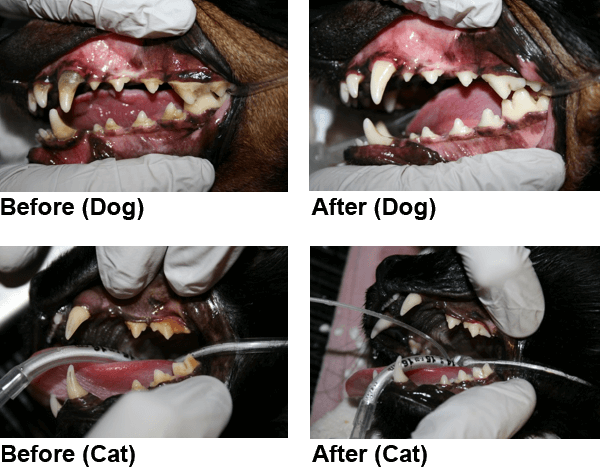
Tools to maintain good dental health:
Annual veterinary dental cleanings (small dogs may require dental treatments every 6 months as they build up tartar at a faster rate).
Tooth brushing at home daily (with pet-friendly toothpaste).
Dental products/treats approved by the Veterinary Oral Health Council.
Feeding a dental diet designed to prevent/remove tartar buildup.